Stamped concrete services in Lakewood CA - the look of stone on a solid slab
Tired of a plain gray patio or a cracked drive? We pour, color and stamp a slab that looks like stone, brick or wood.
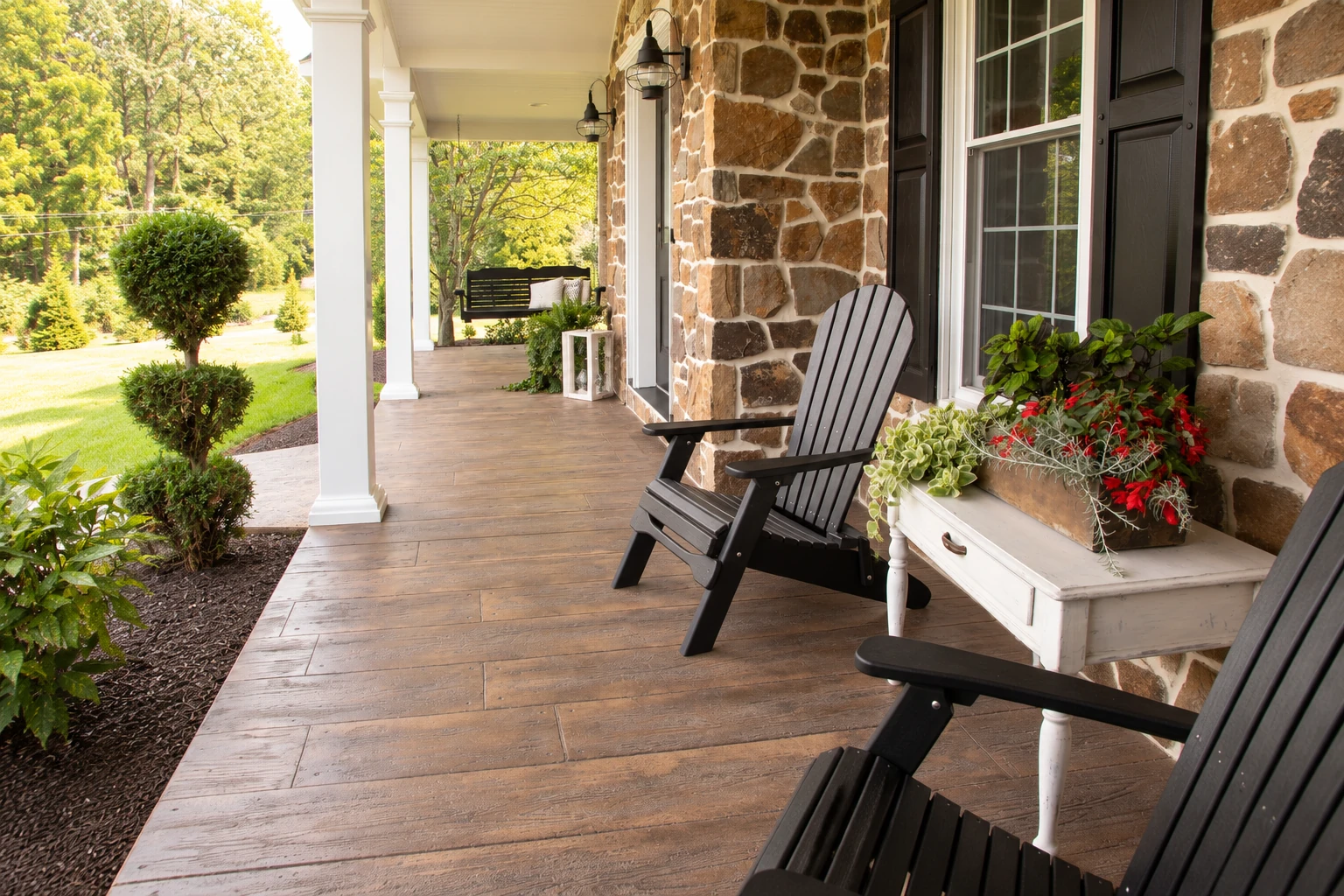
Stamped concrete is a slab first, a look second
Stamped concrete is a regular poured slab that we color, press with rubber stamp mats while it's still soft, and seal, so it looks like stone, brick, wood plank or tile. People usually call when a plain patio feels bare or an old one has cracked and sunk. Underneath, it's the same slab we'd pour for a concrete sidewalk, and the ground under it gets most of my attention.
Your price moves with the size of the area, the digging and base work, the pattern, the color method and the sealer, and the schedule turns on that prep and a good pour day. I write it all into the estimate in plain words. We're licensed and fully insured, and we check whether a permit applies before we price it.
- Base dug out and packed, not raked level
- Slab falls away from the house
- Joints tucked into the pattern lines
- Even color, sealed in at the end
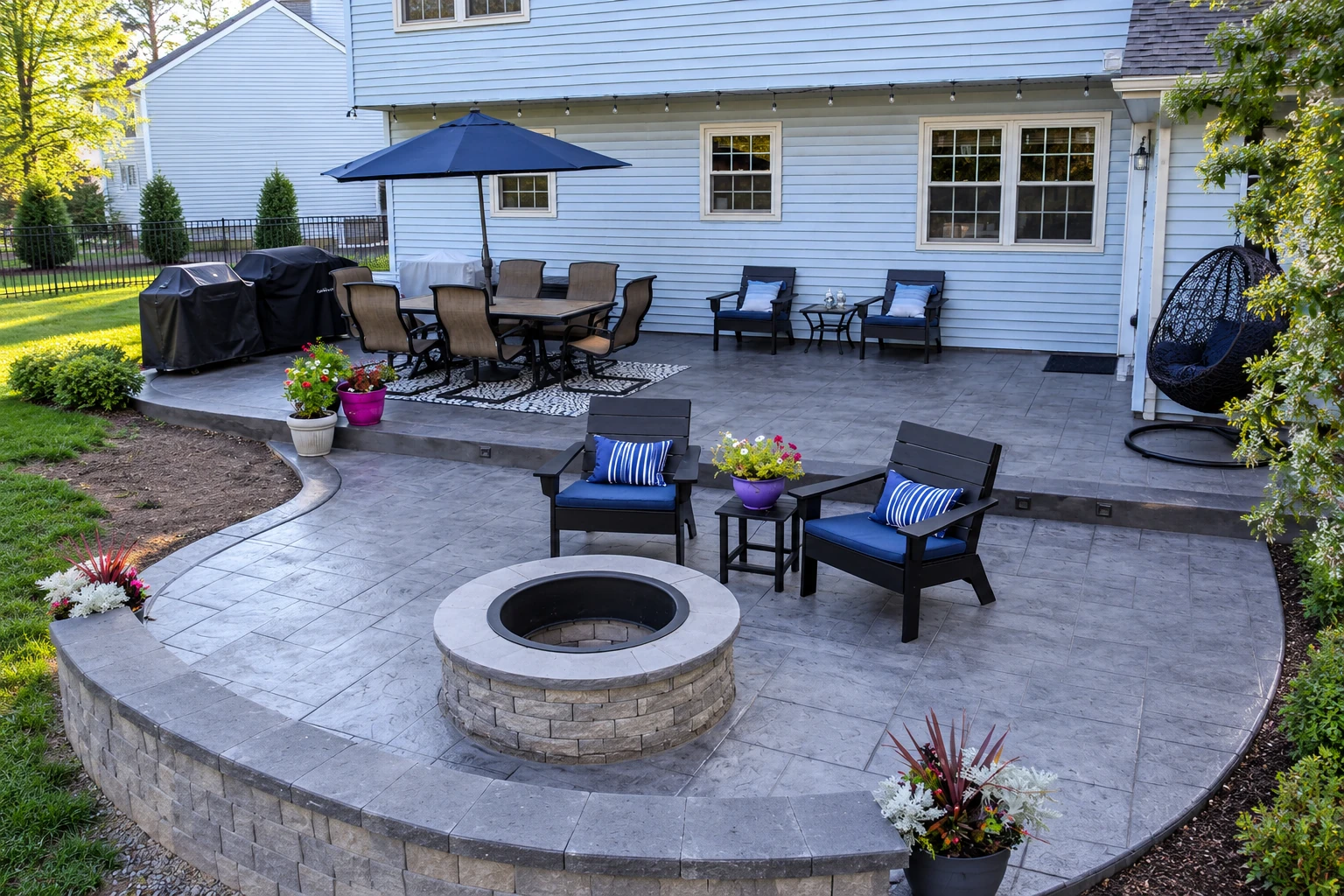
Three ways to finish your slab
The finish you pick decides how the slab looks years from now and how it stands up to feet and tires, so it's worth choosing on purpose.
Plain broom finish
- When it suits
- When looks matter less than grip and the simplest upkeep.
- What to know
- A broom finish leaves light grooves for traction, with no color or pattern.
Stamped, integral color
- When it suits
- Patios and walks where you want color that ages gracefully.
- What to know
- Pigment runs all the way through, so chips match, though tones stay softer.
Stamped, color hardener
- When it suits
- Driveways and paths that take traffic and need a harder top.
- What to know
- Color sits in the top skin, so deep chips show gray and uneven work turns blotchy.
How a stamped job runs
Call or send the form
You call or send the form, and we get back to you to set up a time for me to come out and look.
I write the estimate
I check the ground, the access and the look you want, then write up the prep, the finish and anything a permit might touch.
See a sample section
We make a sample section so you see the color and pattern for real, because a catalog or color chart never looks like the finished slab.
Pour day and walk-through
We dig out and pack the base, pour, stamp and seal, with me on site running the crew, and then I walk the work with you.
Things to settle before the pour
Each of these changes how we plan the pour and what goes into your estimate, so it helps to think them through before I come out.
Spend on the base first
The subgrade, the packed soil under the slab, is hidden, so it's the first budget cut people suggest. I'd rather shrink the area or simplify the pattern, because no stamp saves a slab that settles.
What the slab has to carry
A stamped slab still needs the thickness and steel its use calls for, so a driveway gets built heavier than a garden patio, and we plan it together with any new garage floor it meets.
Hot, dry pour days
On a hot, dry, windy day concrete can set faster than it can be stamped, and the crust cracks under the mats. That's why crews pour smaller sections, add hands and stamp early.
Picking the sealer
Solvent-based acrylic sealers give the deepest color and a wet look, and they recoat easily. Water-based ones have less odor and fumes and are required in some areas, but they can dry cloudy in humid or cold weather.
Stamped patios, drives and walks
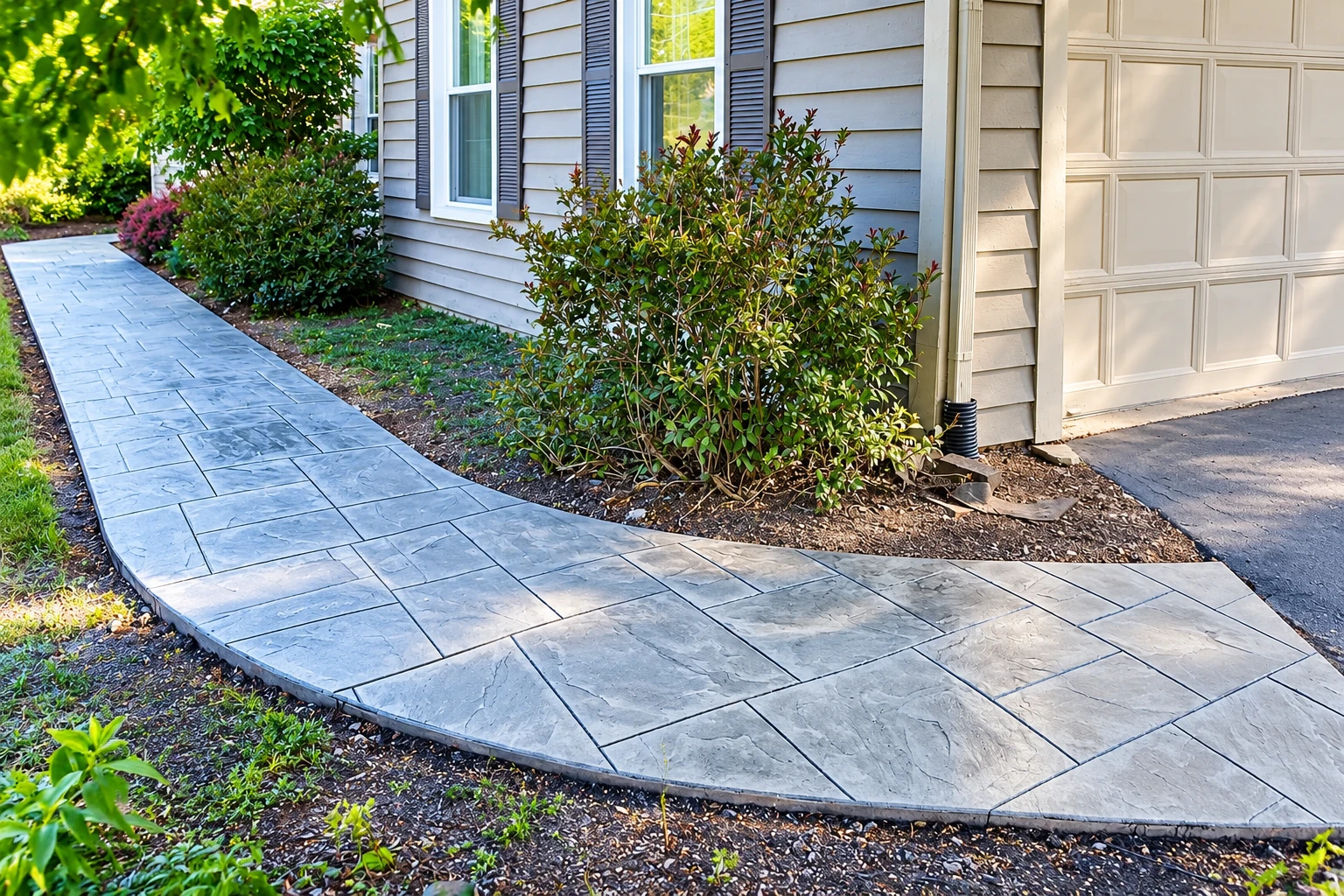
Look for crisp pattern lines, even color with no blotches and joints that sit inside the pattern, then open any photo for a closer look.
Tell us about the space
Tell us if it's a patio, walk or driveway and which look you like. We reply within one business day to set up a free, no-obligation estimate at your property.
To talk now, call
(562) 249-2521Questions people ask about stamped concrete
Another question? Call (562) 249-2521
Will stamped concrete crack like a regular concrete slab?
Yes, it can, because it cracks for the same reasons any slab does. That's why it gets control joints, planned cut lines that give cracking a straight place to happen, on the same spacing as plain concrete. A good question for any crew is how they'll hide those joints in the pattern.
How often does stamped concrete need to be resealed?
Common guidance is every two to three years, sooner on a driveway or busy entry and later on a shaded patio. The sealer protects the color and the surface, so it's part of owning stamped concrete, not an extra. I tell people that up front because it's the upkeep they forget to plan for.
Is stamped concrete slippery when it gets wet?
A freshly sealed stamped slab can be slick when wet. The usual fix is a traction additive mixed into the last coat of sealer, so ask for it on any area that gets wet, like a pool deck, an entry or a sloped walk.
Do you install stamped concrete outside Lakewood, CA?
Yes. We're based in Lakewood and take stamped concrete jobs in many of the cities around it, across Los Angeles County and Orange County, including Long Beach and Downey. The prep and the finish work are the same wherever the slab goes.